 goodword
Why borbor is surging on Vancouver menus — and how to price it
The Cambodian rice porridge is moving from chef special to menu trend. Here is why Vancouver diners are noticing it, how to make a simple version, and how to price it without losing margin.
The short version
- Borbor is getting Vancouver attention through Touk’s C$32 version and related congee pop-ups.
- The trend is being pulled by chef visibility, comfort-food appeal, and premium local ingredients.
- A porridge bowl can work at many price points if food cost stays controlled and toppings are measured.
Borbor is the Vancouver dish to watch
Borbor is Cambodian rice porridge. Think congee, but with its own shape and flavor. In Vancouver right now, the clearest signal is Touk on Alberni Street, where Vancouver Magazine described borbor as a Cambodian-style congee and called it the restaurant’s emotional signature dish.
That matters. A dish does not become a trend just because one kitchen makes it well. It becomes a trend when diners remember it, talk about it, and start seeing related versions elsewhere.
Why it is surging now
Three things are pushing borbor forward in Vancouver.
1) A high-profile chef put it front and center
Touk opened in late December 2025. Its chef, Chanthy Yen, won Top Chef Canada Season 11. That kind of visibility helps a dish travel fast.
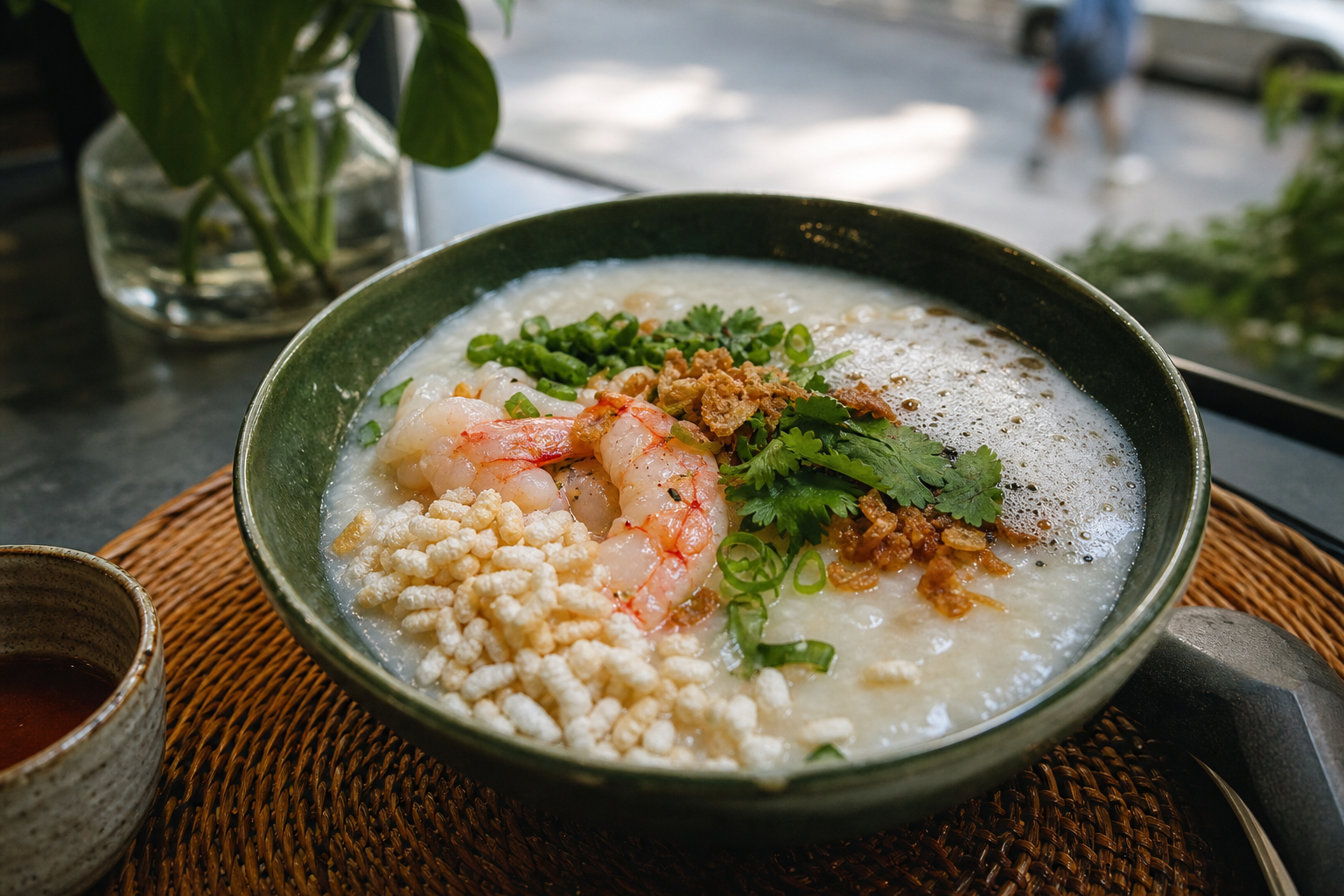
Vancouver Magazine’s coverage also gives borbor a clear identity: a layered bowl with laksa-style flavors, puffed rice, spot prawn or squid, and Kampot pepper foam. That is the kind of plate people remember and photograph.
2) Rice porridge is spreading beyond one restaurant
Daily Hive covered Good Jook Congee Bar, a one-day pop-up in North Vancouver built around congee and jook. The featured bowls were priced at C$10 each, including OG Seafood Jook and Shroom Jook.
That is a useful signal for owners. It says the format has room in the market at both ends: casual comfort food and more polished restaurant plating.
3) Vancouver diners still care about value, but will pay for quality
Toast’s 2026 Canada menu report says diners remain highly price-sensitive, while also placing real value on ingredient quality and being willing to pay a small premium for premium or local ingredients.
Borbor fits that pattern well. It is built on rice, broth, and aromatics. Those are cost-friendly foundations. The value rises when you add B.C. seafood, careful seasoning, and a crisp topping.
What borbor is, in plain English
At its core, borbor is a soothing rice porridge.
The base is simple:
- rice
- stock
- ginger or aromatics
- seasoning
- a topping
The Touk version is more layered than a home bowl. Vancouver Magazine mentions laksa-style flavors, spot prawn or squid, puffed rice, and Kampot pepper foam. That tells you the dish has a broad comfort-food base, then a premium finish.
A simple borbor recipe you can actually run
This is a practical, borbor-inspired bowl, not a copy of Touk’s exact recipe.
Seafood borbor bowl
Ingredients for 4 bowls
- 1 cup jasmine rice
- 8 cups light chicken or seafood stock
- 6 slices ginger
- 2 cloves garlic, smashed
- 1 tbsp fish sauce
- Salt, to taste
- 200 to 250 g shrimp or mild white fish
- 1 tsp black pepper
- 2 green onions, sliced
- Small handful cilantro
- Fried garlic or shallots
- Optional: lime, chili oil, puffed rice
Method
- Rinse the rice well.
- Add rice, stock, ginger, and garlic to a pot.
- Simmer 45 to 60 minutes, stirring now and then, until the rice breaks down into porridge.
- Season with fish sauce and salt.
- Add shrimp or fish for the last 3 to 5 minutes.
- Finish with green onion, cilantro, pepper, and fried garlic.
- Add puffed rice or chili oil if you want more texture.
Why this works
The dish is flexible. The bowl can stay cheap to produce if you keep the base simple. Then you can move the menu price with one or two premium toppings.
A margin-safe pricing frame
If you want borbor on your menu, do not price it like soup. Price it like a composed bowl with a story.
Here is a workable starting frame.
| Version | Estimated food cost target | Suggested menu price | Food cost % |
|---|---|---|---|
| Basic borbor with egg, herbs, fried shallots | C$4.00–C$5.00 | C$14–C$16 | 25%–36% |
| Seafood borbor with shrimp or fish | C$6.50–C$8.00 | C$18–C$22 | 30%–44% |
| Premium borbor with local seafood and refined garnish | C$9.00–C$11.00 | C$24–C$32 | 28%–46% |
A few simple rules help:
- Keep the rice base cheap.
- Measure seafood every time.
- Use one premium garnish, not three.
- Treat puffed rice, herbs, and fried shallots as high-impact, low-cost texture.
- If you charge C$32, the bowl needs a strong plate presence and clear premium cue.
Touk’s C$32 price shows the ceiling is real in Vancouver for a highly finished version. Good Jook’s C$10 pop-up bowls show the floor is also real for a stripped-down version.
A note on origin and meaning
Borbor sits inside the larger family of rice porridges eaten across Asia, but the relevant origin here is Cambodian.
That matters because the dish is not just about comfort. It carries memory. It carries home cooking. It also leaves room for chef interpretation. In Vancouver, that mix plays well with diners who want familiar warmth but are open to something new.
What owners should watch next
If you test borbor, track three things for at least 30 days:
- food cost per bowl
- attachment rate of add-ons
- repeat order rate
If the bowl sells but the seafood cost jumps around, the trend may look good on the floor and bad in the books. That is where POS and inventory tracking matter. You need to know whether the dish is a menu hit, a margin hit, or both.
Borbor is a good example of why the 25% economy hurts owners: the real customer should be yours, and the profit should be yours too.
Goodword helps you keep the ordering site, POS, and customer list in one place so you can see whether a trending bowl is actually making money.
Questions owners ask
What is borbor on a restaurant menu?
Borbor is Cambodian rice porridge. In Vancouver, it is showing up as a comfort bowl that can be finished with seafood, herbs, fried shallots, and crunchy toppings.
How much should I charge for borbor?
A practical range is C$14–C$16 for a basic bowl, C$18–C$22 for a seafood bowl, and C$24–C$32 for a premium version with local seafood and refined garnish.
Is borbor the same as congee?
It is in the same family of rice porridges, but borbor is specifically Cambodian. The flavor, garnish, and presentation can be different from Cantonese-style congee.
Sources
- The Review: It Gets Emotional at Chef Chanthy Yen's Touk - Vancouver Magazine
- 'Top Chef Canada' runner-up to host one-day-only, $10 congee pop-up in North Vancouver | Daily Hive | Dished
- Vancouver to get Hong Kong crime cinema-inspired culinary pop-up | Daily Hive | Dished
- Menu Trends 2026: What Canadian Diners Want More Of
- The Review: It Gets Emotional at Chef Chanthy Yen's Touk - Vancouver Magazine
- 'Top Chef Canada' runner-up to host one-day-only, $10 congee pop-up in North Vancouver | Daily Hive | Dished
- Vancouver to get Hong Kong crime cinema-inspired culinary pop-up | Daily Hive | Dished
Test borbor without guessing your margins.
Put the bowl on your menu, track food cost by batch, and watch whether add-ons and repeat orders make it worth keeping.
Start with goodword →