 goodword
Why handmade customizable pasta is showing up on Vancouver menus — and how to price it
Fresh pasta with choose-your-own sauces is getting traction because it feels crafted, travels well, and can still land in the mid-teens if the portions are disciplined.
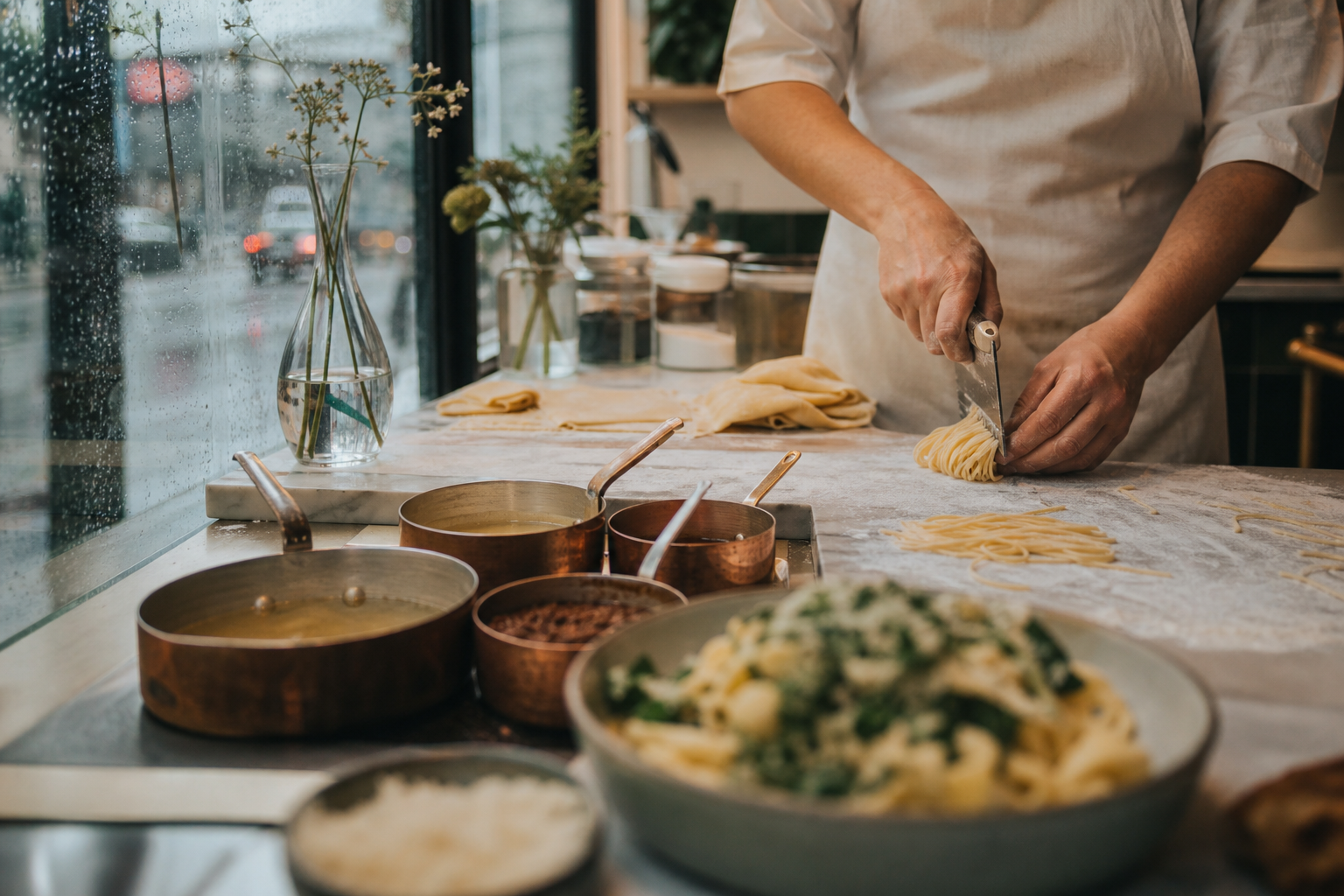
The short version
- Handmade customizable pasta works because it combines craft with fast, mid-teens pricing.
- Vancouver social posts are already showing demand for fresh, customizable pasta at value prices.
- A simple portion rule and a tight sauce matrix can keep food cost under control.
Handmade customizable pasta is the current pasta trend worth watching
In Vancouver, this is not just “pasta.” It is a very specific format: fresh handmade noodles, then a choose-your-own sauce and add-in setup. That mix is what makes it feel current.
Recent Vancouver food posts point to the same idea. One high-engagement post called out a West End spot for “handmade, customizable pasta at very solid prices.” That is the signal. Diners are reacting to a dish that feels made-to-order, comforting, and not outrageous on price.
The best part for owners is simple. It is a trend with a clear menu shape. You can build it, price it, and measure it.
What the format looks like on a menu
The current model usually has three parts:
- a fresh pasta base, often made in house or sourced locally
- a sauce choice, such as rosé, alfredo, mushroom, or meat sauce
- optional add-ins like pancetta, mushrooms, chili oil, or greens
That is the appeal. Guests feel like they are building their own bowl, but the kitchen is still controlling the core items.
Vancouver already has proof that this format can work. Basil Pasta Bar has been operating as a build-your-own pasta restaurant since 2010, and other local pasta-led concepts are leaning into the fresh-pasta craft side. The market is familiar with the idea.
Why it is surging now
1) It fits the price mood
People still want something comforting, but they are watching the bill. Statistics Canada notes that restaurant food prices rose 2.6% in 2025 versus 2024. In that kind of market, pasta has an easy job to do. It looks generous. It feels like a treat. It does not have to carry steak pricing.
2) The ingredient base is still manageable
Pasta remains one of the cleaner categories to cost out. Statistics Canada’s Food Price Data Hub shows eggs at C$4.85 per dozen in May 2026, and dry or fresh pasta around the low C$3.40 range for 500 g in recent readings. That matters because the guest is paying for the craft signal, while the base ingredients are still relatively controlled.
3) Labour is expensive, so format matters
B.C.’s general minimum wage rose to C$18.25 per hour on June 1, 2026. At the same time, labour cost is still one of the biggest staffing pressures for Canadian operators. A pasta line can help here. Fresh pasta, a few sauces, and disciplined prep can be easier to run than a broad full-service menu.
4) The local social proof is already there
TikTok is not a census, but it is useful for spotting what people keep repeating. In the Vancouver food set, the pasta post that got attention did one thing well: it framed the dish as handmade, customizable, and solid value. That is the exact combination that tends to travel.
A simple origin story you can tell guests
The roots of this dish are old. Fresh egg pasta is tied to Emilia-Romagna in Italy, where rolled sheets of dough, or sfoglia, are a core part of the cuisine. Tagliatelle, tortellini, and other regional pastas all come from that tradition.
The modern Vancouver version is the service model, not the dough itself. Take the old craft. Put it in a fast-casual bowl. Let the guest choose a sauce. Keep the menu short enough to run during lunch.
A simple house recipe that is easy to execute
Here is a basic version that works as a lunch special or a core menu item.
Fresh egg pasta dough
- 300 g 00 flour
- 3 eggs
- pinch of salt
Method
- Mix the flour, eggs, and salt into a rough dough.
- Knead for 8 to 10 minutes until smooth.
- Rest for 30 minutes.
- Roll thin and cut into tagliatelle.
- Boil for 1 to 2 minutes if the pasta is very fresh.
- Finish with butter, pasta water, Parmigiano, and black pepper.
That base is cheap enough to support add-ons, but strong enough to stand on its own.
Margin-safe pricing framework
The mistake is pricing it like a cheap bowl. The better move is to separate the base from the extras and protect your margin on every layer.
A simple rule:
- Base pasta bowl: target 25% to 30% food cost
- Premium protein add-on: price separately
- Extra cheese or vegetables: small, high-margin upsell
Here is a working example.
| Item | Estimated food cost | Suggested menu price | Food cost % |
|---|---|---|---|
| Fresh pasta + simple butter/parmesan base | C$3.25 | C$13.95 | 23.3% |
| Fresh pasta + rosé or mushroom sauce | C$4.25 | C$14.95 | 28.4% |
| Fresh pasta + meat sauce | C$5.00 | C$16.95 | 29.5% |
| Fresh pasta + premium add-on like pancetta | C$5.75 | C$17.95 | 32.0% |
| Fresh pasta + premium add-on plus extra cheese | C$6.25 | C$18.95 | 33.0% |
Those menu prices line up with current Vancouver signals. A live delivery menu for The Sauce Pasta Cafe shows mainstream sauces in the C$12.95 to C$16.95 range. That gives operators a real-world price band to work from.
What to watch in your own store
Do not let the bowl get too fat.
If the pasta portion creeps up by 20 grams, the cost does not look dramatic on paper. But across lunch service, that adds up fast. The same goes for cheese, oil, and proteins. A pasta concept can look profitable on the menu and still leak margin in prep.
Keep the menu tight:
- 1 fresh pasta shape to start
- 3 to 4 sauces
- 4 to 6 add-ins max
- one rotating seasonal special
That keeps purchasing simple and waste low.
Why this is a good fit for Vancouver
Vancouver diners have been rewarding food that feels like comfort and still feels worth the money. Handmade customizable pasta sits right in that lane. It is familiar, but not boring. It is flexible, but not messy.
For owners, that matters because it is easier to market a clear format than a broad, fuzzy one. Guests can understand it in one glance.
If you want to know whether it is actually making money, you need clean POS item counts and inventory tracking so you can see which sauces, add-ons, and bowl sizes are really carrying the margin — and that is exactly where goodword helps.
Questions owners ask
How much should a handmade customizable pasta bowl cost in Vancouver?
A practical starting range is C$13.95 to C$16.95 for the core bowl, with premium add-ons priced separately.
What food cost should I target for customizable pasta?
Aim for about 25% to 30% food cost on the base bowl. Premium add-ons can run a little higher if the base dish stays disciplined.
How many sauces should I launch with?
Start with 3 to 4 sauces. That is enough choice for guests without creating waste and prep drag.
Sources
- Order The Sauce Pasta Cafe - Vancouver, BC Menu Delivery [Menu & Prices] | Vancouver - DoorDash
- Home | Basil Pasta Bar
- The Daily — Food services and drinking places, December 2025
- Food Price Data Hub
- BC Gov News
- Dining at Magari by Oca: A Seven-Course Pasta Experience - Foodgressing
- Il gusto dei primi piatti regionali | Emilia Romagna Turismo
- CASERECCIO - Casereccio Foods
- Local, Fresh Italian Gourmet Pasta for Wholesale — Zara's Pasta
- 2026 Product Catalogue Pricing and a
See if your pasta special is actually paying its way
Track each bowl, sauce, and add-on in one place. Then compare menu price, food cost, and waste before the trend turns into a headache.
Book a setup →